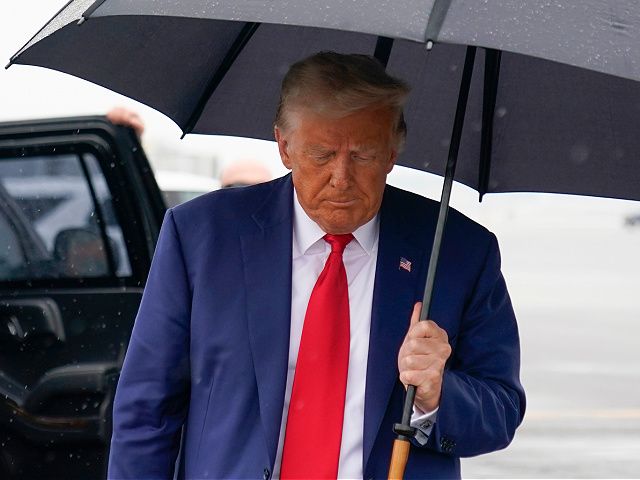
The Supreme Court struck down Trump’s birthright citizenship order 6-3 in Trump v. Barbara. What the ruling means and the 5-4 split hiding underneath it.
The Supreme Court struck down President Trump’s executive order ending birthright citizenship on June 30, 2026, ruling 6-3 in Trump v. Barbara that children born on U.S. soil to undocumented or temporarily present parents are citizens at birth. The order, signed on Trump’s first day back in office in January 2025, never took effect every court that reviewed it blocked it. So citizenship law hasn’t changed. But look one layer down and the story gets more complicated: only five justices said the Constitution actually requires birthright citizenship. That single-vote margin is now the most important number in American immigration politics.
POWER: Who Won, Who Lost, and Who’s Holding the Pen
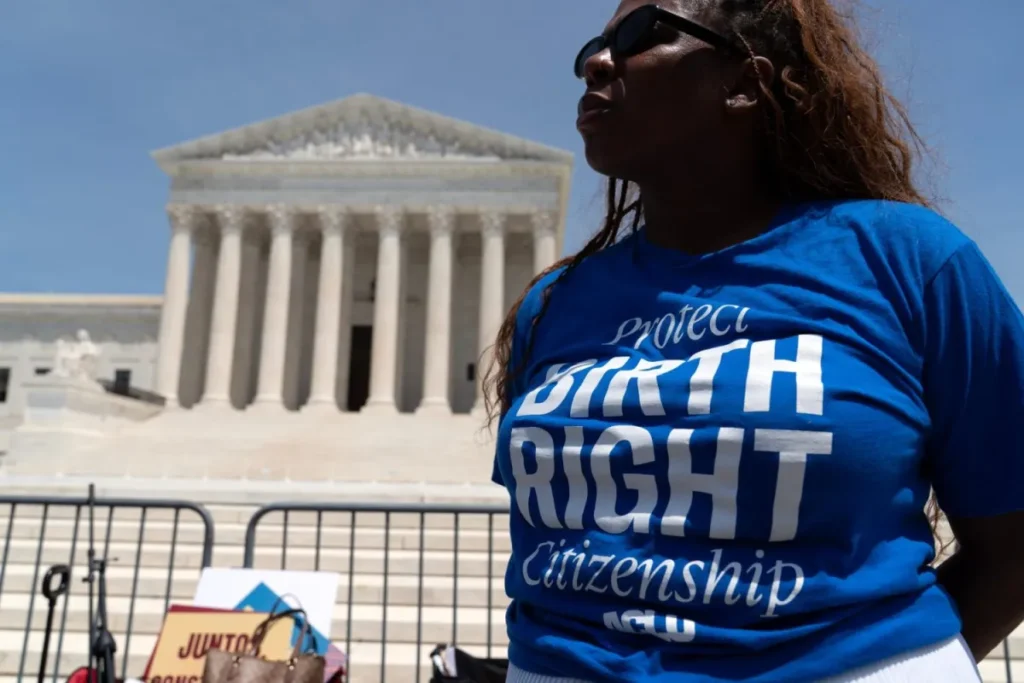
The clearest winner is Chief Justice John Roberts, who wrote the majority opinion joined by Justices Sotomayor, Kagan, Barrett, and Jackson. Roberts grounded birthright citizenship in English common law, the Constitution’s original design, and the Court’s 1898 precedent in United States v. Wong Kim Ark, writing that “citizenship, then and now, was the right to have rights.” The ACLU-led coalition that brought the class action — argued by Cecillia Wang, herself a birthright citizen born to Chinese immigrant parents — won a near-total victory.
The losers are obvious but not equal. Trump lost his signature attempt to redefine citizenship by executive pen — his third major Supreme Court defeat in months, after rulings against his tariffs and his attempt to fire Federal Reserve governor Lisa Cook. Justices Thomas (in a 91-page dissent joined by Gorsuch) and Alito (39 pages, solo) lost the constitutional argument.
The pivotal figure is Justice Brett Kavanaugh. He voted to strike down the order — but only because it violates a federal statute, 8 U.S.C. §1401(a). He explicitly wrote that Congress could amend that law to create new exceptions to birthright citizenship without violating the Fourteenth Amendment. Vice President JD Vance seized on that immediately, telling Fox News the concept of birthright citizenship is “hanging by a thread.” Republicans in Congress heard the same message: within hours, Senators Mike Lee and Eric Schmitt called for a constitutional amendment, while Tom Cotton, Lindsey Graham, and others revived restriction bills. Trump himself claimed on Truth Social that ordinary legislation could “make it up” — a claim the five-justice constitutional holding flatly contradicts.
PRESSURE: The Numbers, the Timeline, the Next Moves
The stakes were never abstract. According to an amicus brief from 141 social scientists, the order would have denied citizenship to roughly 255,000 babies per year — 4.8 million U.S.-born children by 2045 and 12.8 million by 2075 — creating a hereditary underclass of people born in America but belonging to no country. Babies born after February 20, 2025 were protected throughout the litigation by a nationwide class certified by federal judge Joseph Laplante in New Hampshire, whose injunction the Court just affirmed. Those children’s status is now settled.
What happens next runs on two tracks. The legislative track is mostly theater: any statute restricting birthright citizenship runs into the five-vote constitutional wall, and a constitutional amendment requires two-thirds of both chambers plus 38 states — citizenship scholar Rainer Bauböck puts the odds at “practically zero.” The Hill reports GOP lawmakers are instead eyeing narrower plays: targeting “birth tourism,” defining “subject to the jurisdiction,” and using funding leverage.
The administrative track is where real pressure lands. Mark Krikorian of the restrictionist Center for Immigration Studies called the loss “almost a gift” to Trump — an argument for accelerating deportations before immigrants have children, and for changes like screening visa applicants for pregnancy, an idea already in Rep. Andy Ogles’s post-ruling bill. The ruling protects babies’ citizenship; it does nothing to protect their parents from removal.
PERSPECTIVE: The History, the Best Case Against, and What You’d Miss
The 14th Amendment wasn’t an accident
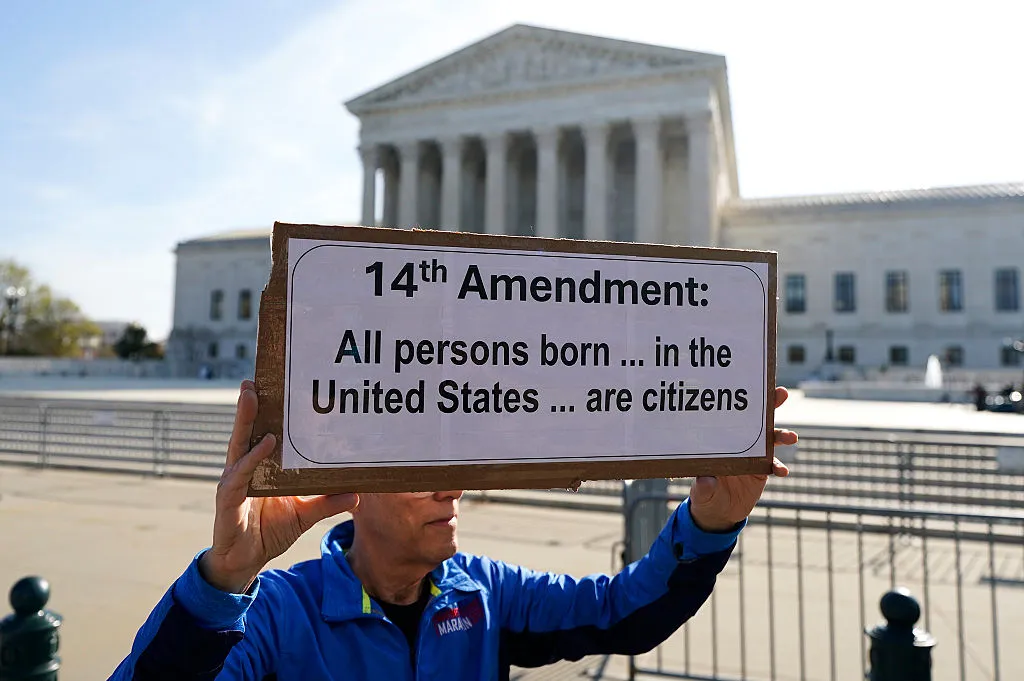
Ratified in 1868 to bury Dred Scott, the Citizenship Clause deliberately attached citizenship to birthplace, not bloodline. Wong Kim Ark confirmed in 1898 that a San Francisco-born son of Chinese immigrants was a citizen, and the rule held even at America’s ugliest — children born to Japanese Americans in WWII internment camps were citizens automatically.
The strongest case on the other side
The dissents aren’t frivolous. Thomas argued the clause guaranteed citizenship to freed Black Americans precisely because they had no other homeland or allegiance — a condition children of temporary visitors don’t share — and read Wong Kim Ark as limited to lawfully domiciled parents. Alito argued the ruling preserves an incentive for illegal entry and birth tourism, calling jus soli a “medieval rule” even Britain has abandoned. Roberts’s answer: the domicile theory is unworkable (every nation regulates its citizens abroad, so the test would exclude nearly everyone), the historical record is against it, and both dissents needed ad hoc exceptions to avoid results even they couldn’t stomach. On the evidence, the majority has much the better of the history — the Executive Branch itself treated the clause as codifying common-law birthright citizenship for decades after ratification.
What one-source readers miss
Two things. First, the battlefield has moved from the Constitution to §1401(a) — Kavanaugh’s concurrence is a published roadmap for Congress. Second, the margin: a five-justice constitutional holding is one retirement away from becoming a target, and commentators on both sides are already comparing the overturn campaign to the long march against Roe.
Birthright citizenship survived by six votes as law but only five as a constitutional right — and the movement to end it just got handed a map to the missing vote.
Leave a Reply