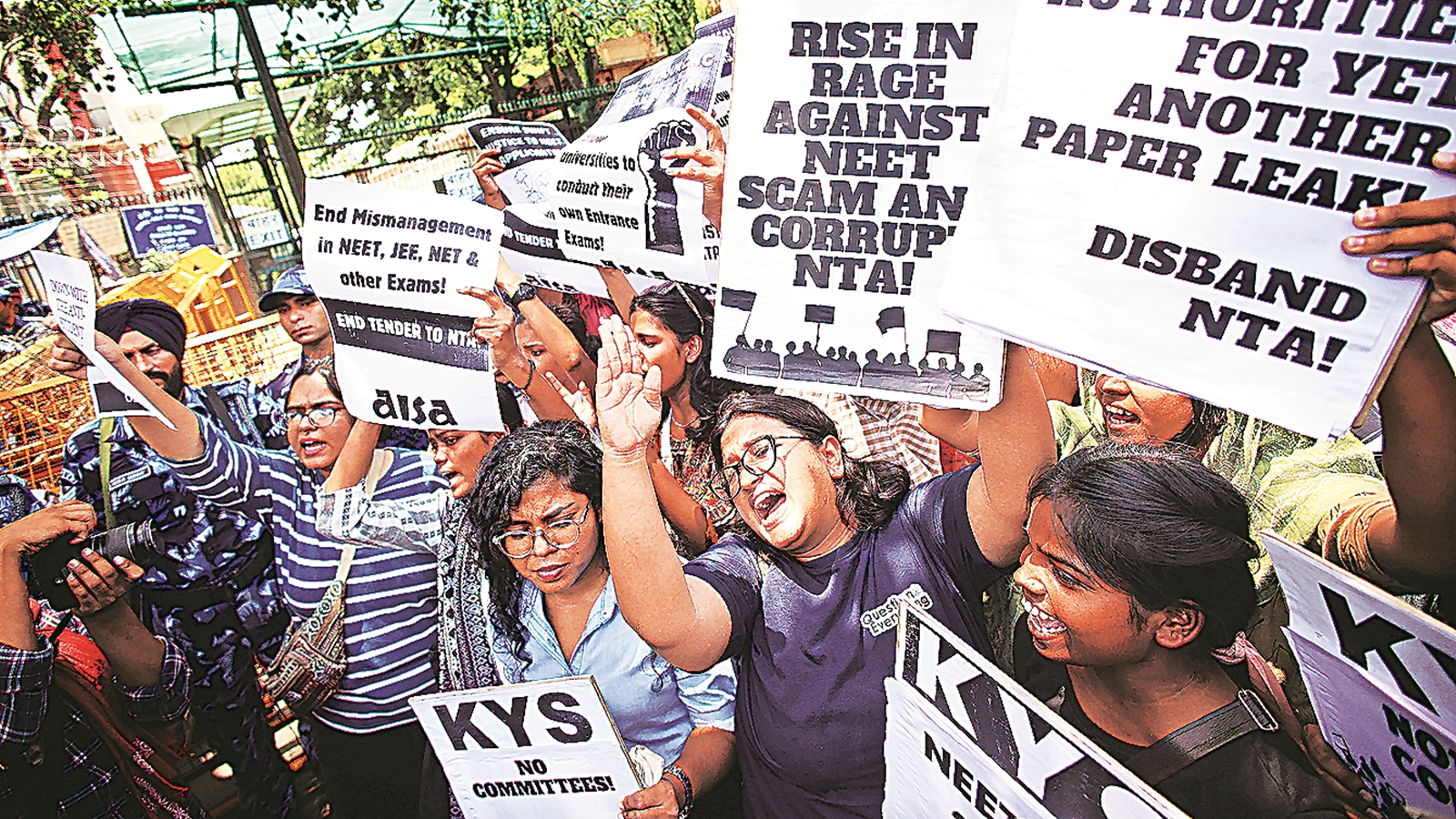
India’s NEET-UG 2026 paper leak triggered mass protests and a wave of student suicides. Here’s what happened, who’s responsible, and what’s next.

India’s biggest medical entrance exam was compromised, cancelled, and re-run — and at least a dozen students died by suicide in the chaos that followed. The NEET-UG exam, held May 3, 2026 for over 2.27 million aspirants, was cancelled on May 12 after investigators found significant overlaps between a pre-circulated guess paper and the real questions, leading to multiple arrests including NTA insiders. At least 13 NEET aspirants are reported to have taken their own lives in the weeks that followed, and more than 22 lakh (2.2 million) students were left in limbo waiting for a rescheduled exam. This is what actually happened, and why the anger hasn’t faded.
Who Holds the Power Here
CBI investigators arrested Shubham Khairnar in Nashik, who allegedly acquired the papers from a primary source and sold them for ₹15 lakh, along with Pune-based professors P.V. Kulkarni and Manisha Mandhare, accused of running coaching classes where leaked questions were dictated to students. The network reportedly spanned Rajasthan, Maharashtra, and other states, and investigators later found the 2025 NEET paper had been compromised by the same racket. This is the system that’s supposed to gatekeep who becomes a doctor in India — and it had a price tag.
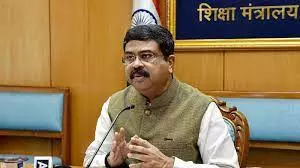
The institutional accountability is murkier. Union Education Minister Dharmendra Pradhan admitted there had been a “breach in the command chain” and announced NEET will move to a computer-based format starting 2027 — but no minister has resigned, and the agency responsible, the National Testing Agency, remains intact. Legal experts and aspirants point out this isn’t an isolated failure: the NTA, created in 2017 to standardize exam management, faced a near-identical scandal in 2024 involving leaks, inflated grace marks, and mathematically improbable scores. An expert interviewed by Al Jazeera pointed to the structural problem: every stage from paper-setting to printing to transmission to delivery at exam centers involves human intervention, much of it outsourced to contractual staff, which weakens accountability at exactly the points where leaks happen. Two scandals in three years from the same root causes isn’t a glitch. It’s a design flaw nobody in power has fixed.
Why This Is a National Crisis Right Now
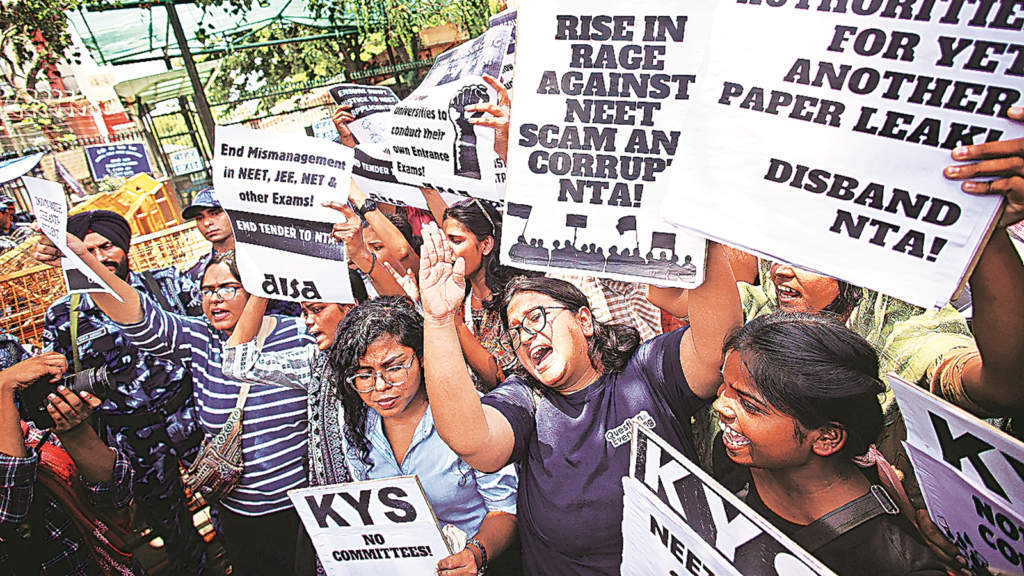
The cancellation triggered large protests in Delhi and other cities, including by the National Students’ Union of India, with students and parents demanding accountability and the resignation of NTA officials. On June 6, 2026, the Cockroach Janata Party led a protest at Jantar Mantar specifically demanding Pradhan’s resignation. Many student groups say the repeated disruptions caused severe stress, anxiety, and loss of motivation — and for some, far worse outcomes.
This is the part that should stop anyone scrolling past: the 13 reported suicides unfolded over 46 days between the May 12 cancellation and the June 21 re-exam, driven by what families and reporters describe as crushing pressure, mental exhaustion, and prolonged uncertainty. Behind every number is a family that sacrificed everything for one shot at a medical seat. One aspirant’s family had sold land and taken on debt to fund years of coaching and rent in a coaching hub. That’s not a statistic — that’s a household’s entire future, gone in a single administrative failure.
Former Tamil Nadu Chief Minister M.K. Stalin urged the central government to exempt NEET-UG for 2026 entirely and let states run their own medical admissions instead. The Federation of All India Medical Associations petitioned the Supreme Court for NTA reforms and a court-monitored re-exam, and on May 25, the Supreme Court sought a status report on whether the government had actually implemented reforms recommended after the 2024 leak. Translation: the court is openly asking why nothing changed last time
What’s Easy to Miss If You Only Read One Source
The government’s response wasn’t nothing — but it also wasn’t structural reform. Pradhan announced relief measures for the re-exam: 15 extra minutes, waived fees, and a one-week window for students to change exam cities, and the June 21 re-test ran with biometric verification, CCTV, AI-assisted monitoring, and heavy police deployment — with the NTA reporting it went smoothly and received no leak complaints. If you stop there, it looks like the system worked under pressure.
But that framing skips the human cost still unfolding. A Congress spokesperson noted the deaths weren’t isolated to the immediate leak fallout but reflect a larger pattern of academic pressure on India’s youth, citing NCRB data that roughly 63,915 children and adolescents under 18 died by suicide nationally in the broader timeframe cited — a reminder that NEET’s failures are landing on a population already under enormous strain. It also skips that not a single senior official has lost their job over two scandals in three years, and that “move to computer-based testing by 2027” doesn’t address the outsourcing and human-intervention points in the leak chain that experts say are the actual vulnerability
India re-ran the exam under tighter security and called it solved, but a system that lost the trust of 2.2 million students — and at least 13 of their lives — twice in three years isn’t fixed by biometrics alone.

Leave a Reply